David Hockney:
A British Eye
Curated by Eleanor Ekserdjian
David Hockney’s influence on art cannot be overstated. For seven decades his experimentation and innovation have profoundly influenced British art.
In his earliest paintings and drawings at the Royal College of Art, he laid out the foundations of his artistic practice in works that are intensely autobiographical and already hint at his sexuality.
His paintings made in LA in the 1960s capture a new optimism and freedom. His use of vibrant colour - developed during this time - became one of the most distinctive and celebrated features of his work. He famously stated: ‘I prefer living in colour’.
His etchings for A Rake’s Progress, which were made into opera sets for Glyndebourne in 1974 translated prints into three dimensions.
Through his continued experimentation with different subject matter through the varied mediums of painting, drawing, printmaking, photography and moving image, Hockney’s works seem ever relevant for British Art.
Portraits feature throughout his career, and underline the significant role that his family, friends and his partners played in his life and work. Throughout his long life, he continued to draw inspiration from direct observation, and from his experience of being in the landscape.
Perhaps most importantly, he taught us about looking.
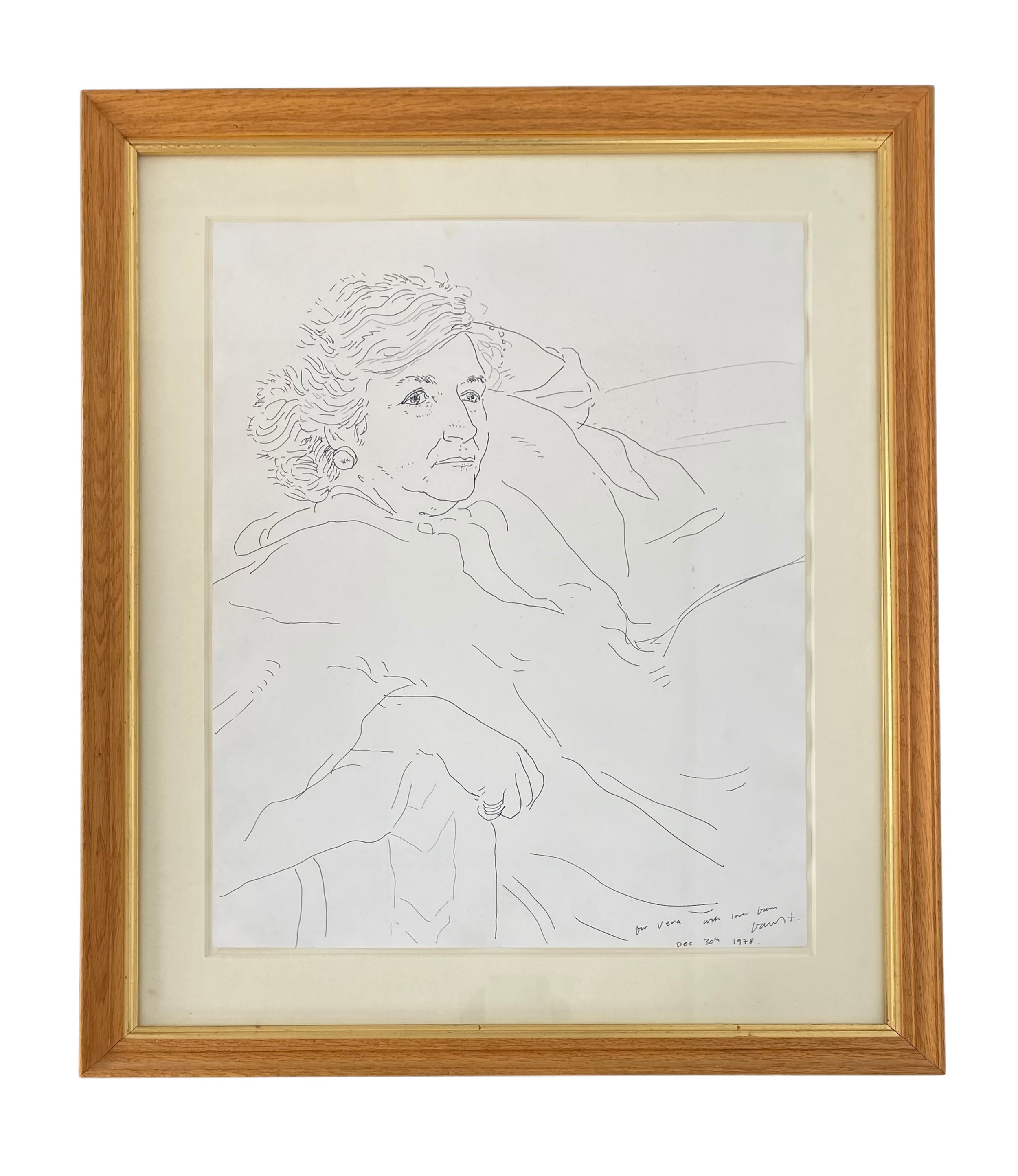
DAVID HOCKNEY (1937 -2026)
Vera Russell, 1978
Pen on paper
35.5 x 43.2 cm
Collections: Vera Russell and thence by descent to the present day
Hockney described Vera Russell as ‘’a wonderful woman … a real art groupie - she loves art and she loves artists. And I love her. A lot of people think she’s a bit tough … But she’s terrific. She ran that Artist’s market in a kind of strange way because she felt artists should sell their work to people who want it, people who like it’’ (Christopher Sykes Hockney: The Biography volume 1, p.170).
Vera Russell (1911 – 1992) had a colourful life. Born in Russia (nee Poliakoff) she escaped St Petersburg during The Revolution, trained as a ballerina and then became a Shakespearean actor performing alongside Laurence Olivier and John Geilgud and starring in a film directed by Alfred Hitchcock. By the time of The War, she was a BBC journalist in Paris where she knew Picasso who painted her portrait then and again in the ‘50’s.
After The War, Russell became a prominent figure in the art world as dealer, writer and exhibition organiser. Her third husband was the well-known art critic John Russell. Correspondence testifies to the warm friendship between her and David Hockney and besides this magisterial drawing Vera also features as the figure walking in Hockney’s etching Homage to Michelangelo. Hockney was supportive of the Covent Garden Artist’s market, a scheme Russell founded in the 70’s to promote contemporary art.
Stand 11
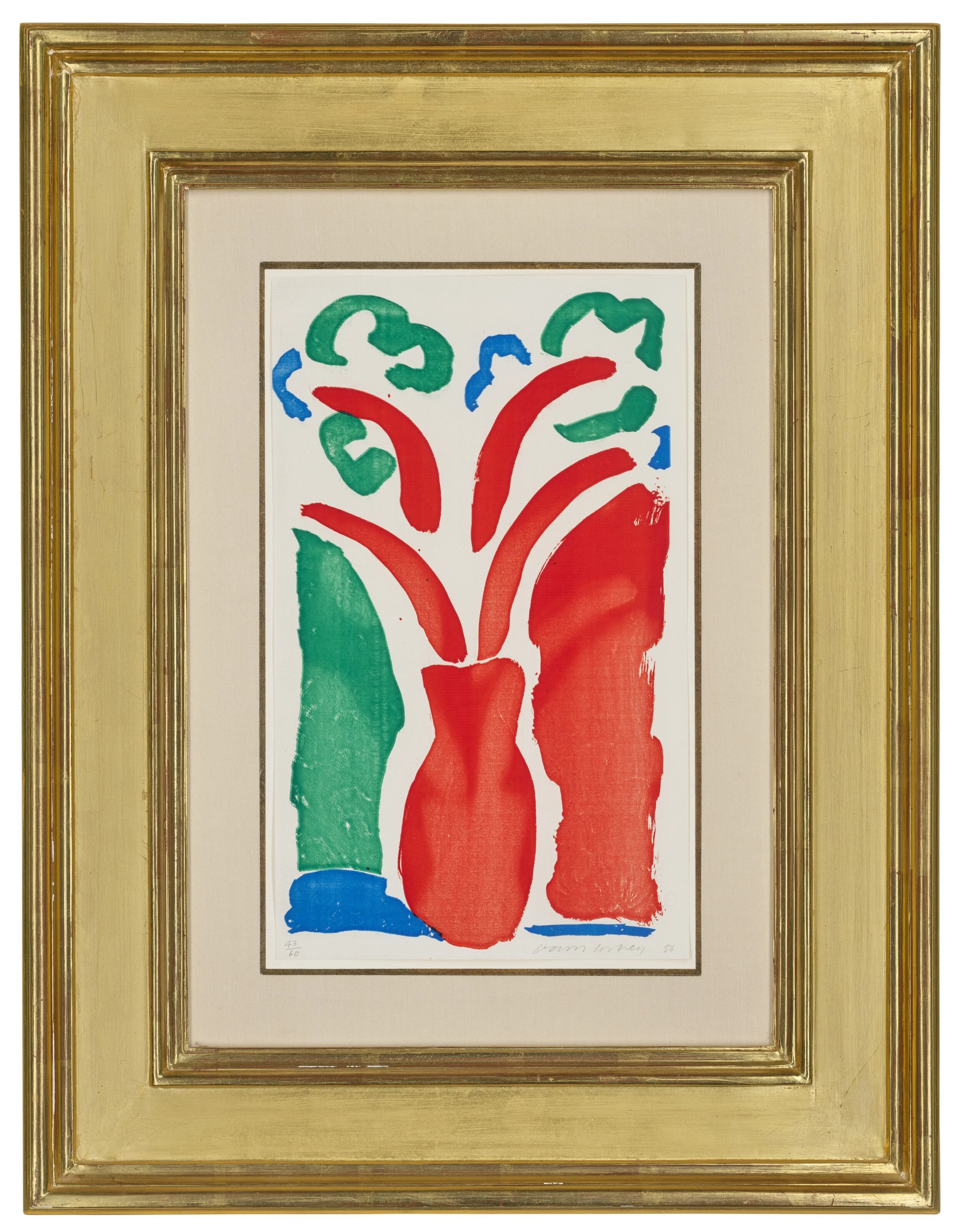
DAVID HOCKNEY (1937 -2026)
The Red Pot, 1986
Signed and dated, numbered 43/60, handmade print in colours executed on a colour copy machine, on laid paper, numbered 43/60
35 x 21.5 cm
£60,000
Collection: A gift from the artist and thence by descent
Literature: Museum of Contemporary Art Tokyo Hockney Prints 1996 (312)
In February 1986 while working on designs for the Opera, Hockney began experimenting with photocopiers to produce what he described as “home-made prints”. Employing traditional printmaking processes and using high-quality Arches paper, the artist fed the sheets through an office photo copier until each colour had been added. For Hockney, the process was revelatory: ‘’With these copying machines, I can work by myself - indeed you virtually have to work by yourself, there’s nothing for anyone else to do - and I can work with great speed and responsiveness. In fact, this is the closest I’ve ever come in printing to what it’s like to paint: I can put something down, evaluate it, alter it, revise it, all in a matter of seconds’’. (LACMA, Metropolitan, Tate Hockney Retrospective 1988 p.78)
Stand 11
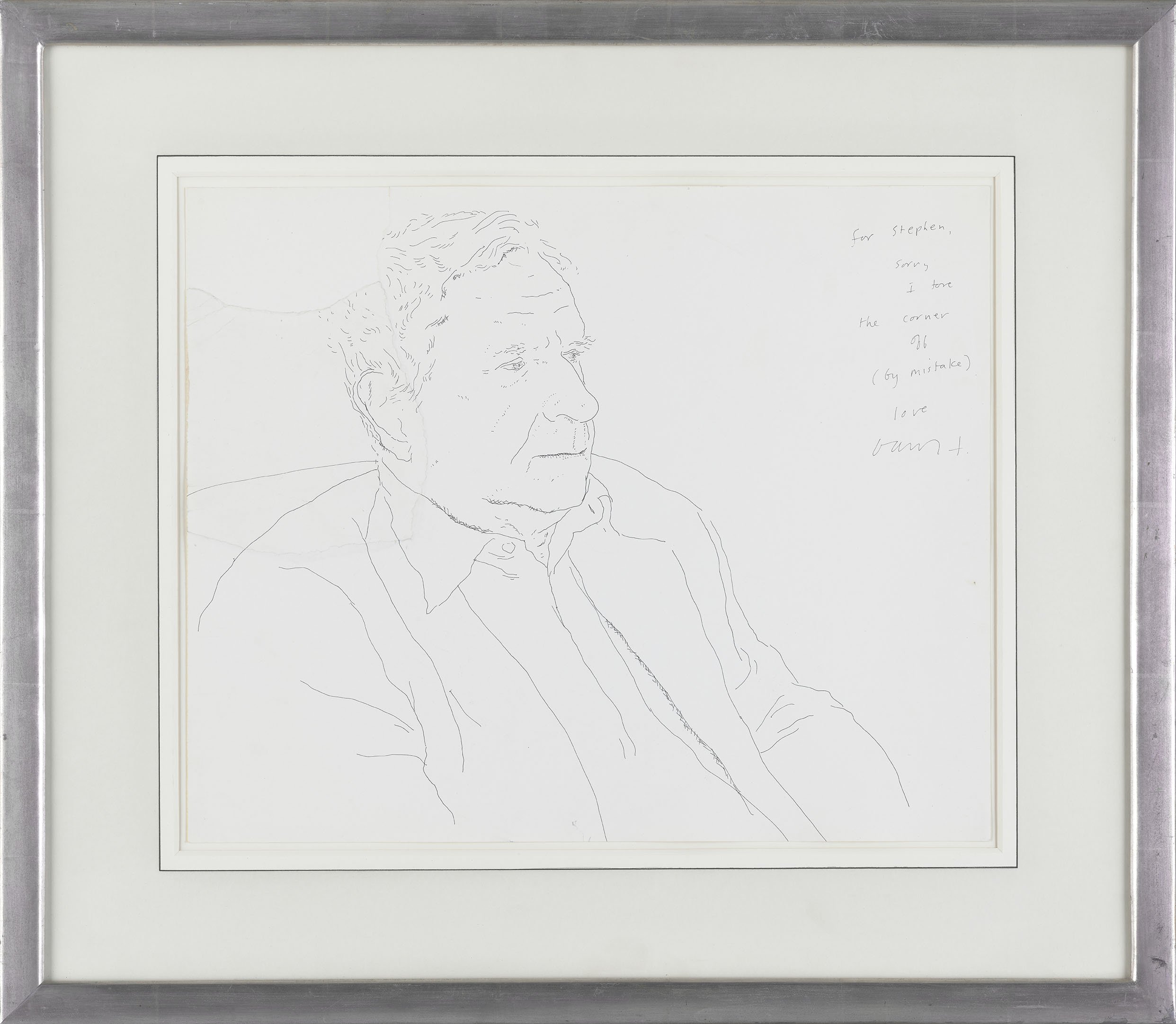
DAVID HOCKNEY (1937 -2026)
Stephen Spender, 1981
Pen on paper
35.5 x 43.2 cm
£45,000
Dedicated For Stephen sorry I tore the corner off by mistake love David (Verso) Extensively annotated in the artist’s handwriting
Collections: A gift from the artist to the sitter; Thence by descent to Lizzie Spender who gave the drawing to John Sutherland in 2010
Sir Stephen Spender CBE (1909 – 1995) the English poet and novelist came to the fore alongside W.H Auden and Christopher Isherwood in the 1930’s. His most famous poem An Elementary School Classroom in a slum reflects his concerns with social injustice and the class struggle. A friend of artists such as Henry Moore, Frank Auerbach and Francis Bacon this drawing was done on a stop-over at Tokyo airport when Spender was travelling with Hockney to China to collaborate on a travel book China Diary which was published in 1982. Spender and Hockney became close friends and worked together again on Hockney’s Alphabet published in 1989. Spender writes that at the time he was drawn by Hockney he was ‘’saturated with exhaustion like a sponge with water’’.
Spender’s daughter Lizzie gave the drawing to her father’s biographer John Sutherland.
Stand 11
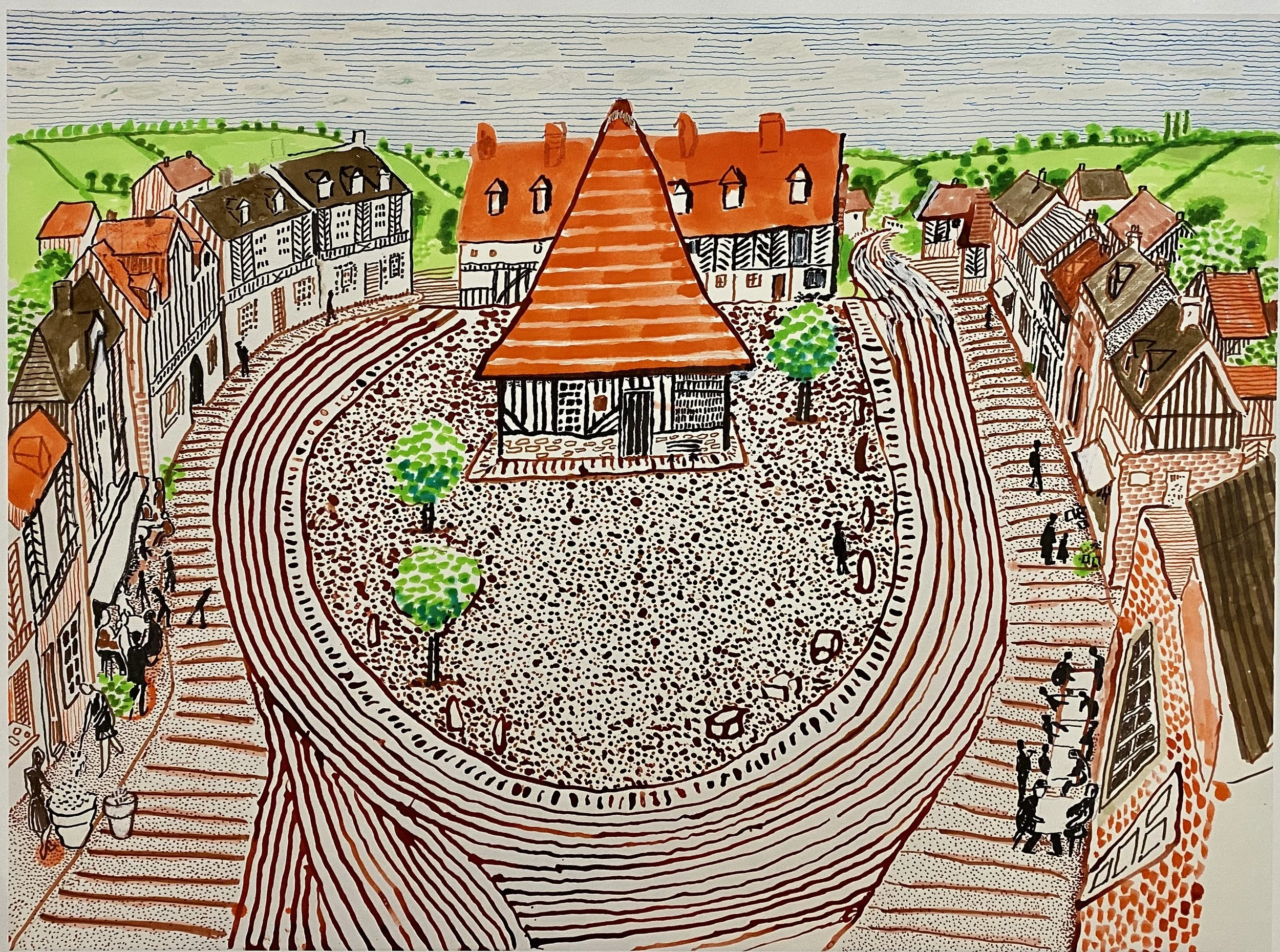
DAVID HOCKNEY (1937 -2026)
Beuvron-en-Auge Panorama, 2019
Signed and dated in pencil, edition of 35, inkjet print on paper
73.7 x 99.1 cm
£225,000 + applicable taxes
BLOND CONTEMPORARY
Stand 15
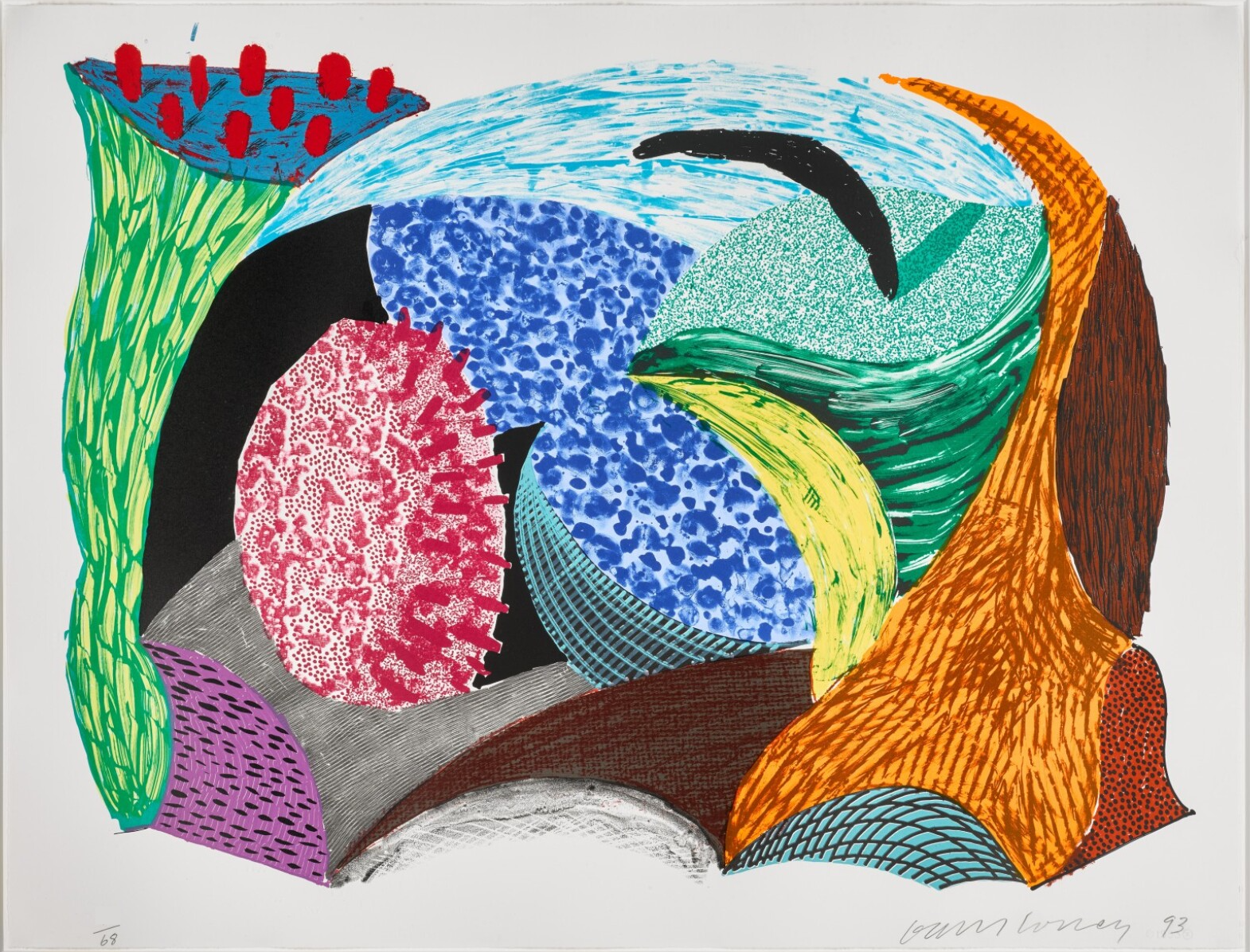
DAVID HOCKNEY (1937 -2026)
Blue Hang Cliff, 1993
Edition of 68, lithograph and screenprint on Arches paper
58.4 x 76.2 cm
£55,000 + applicable taxes
BLOND CONTEMPORARY
Stand 15
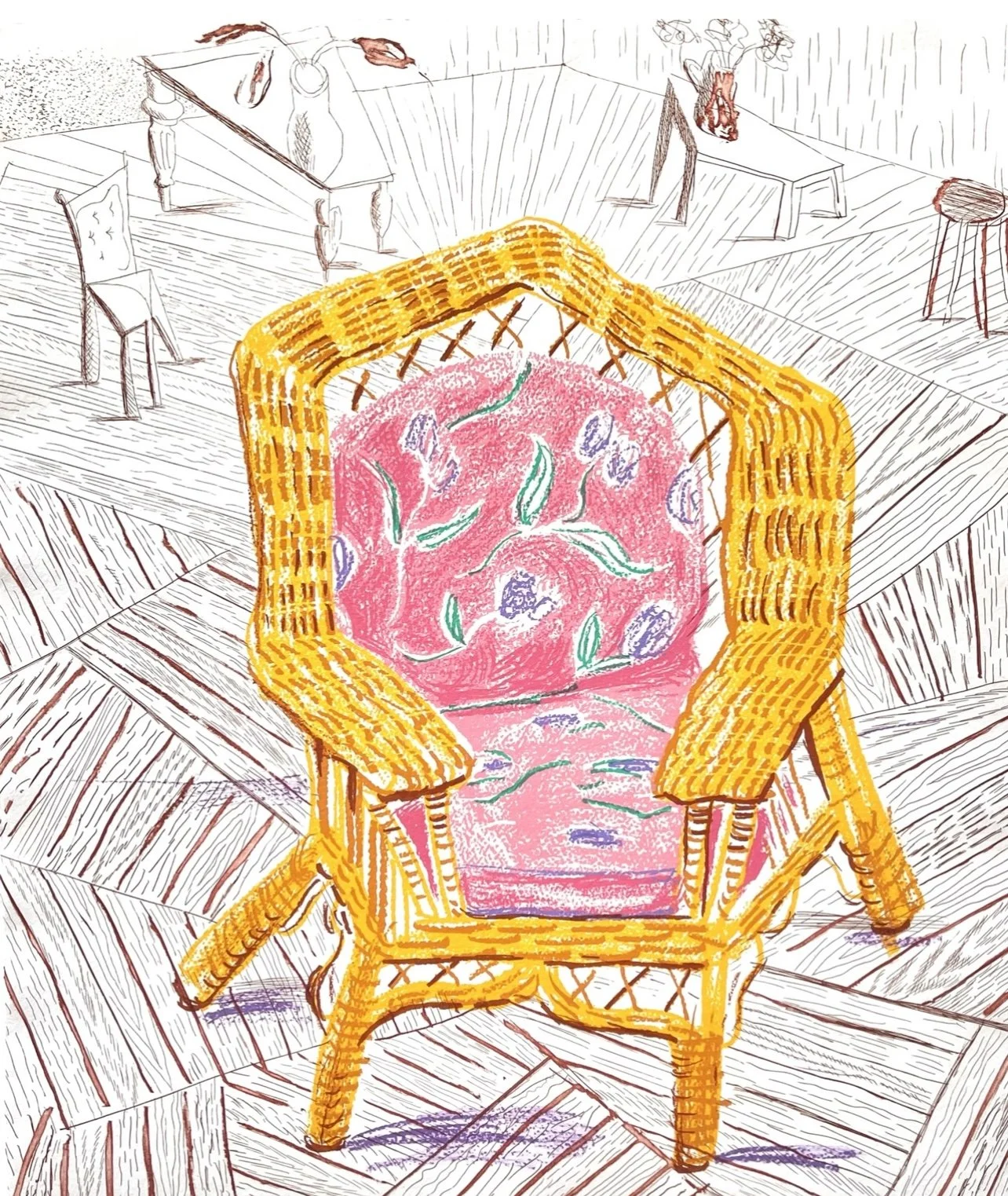
DAVID HOCKNEY (1937 -2026)
Number 1 Chair, 1985-6
Artist’s proof aside from the edition of 60, signed, dated and numbered in pencil, colour lithograph and etching on handmade HMP paper
56.5 x 47.9 cm
£85,000 + applicable taxes
BLOND CONTEMPORARY
Stand 15
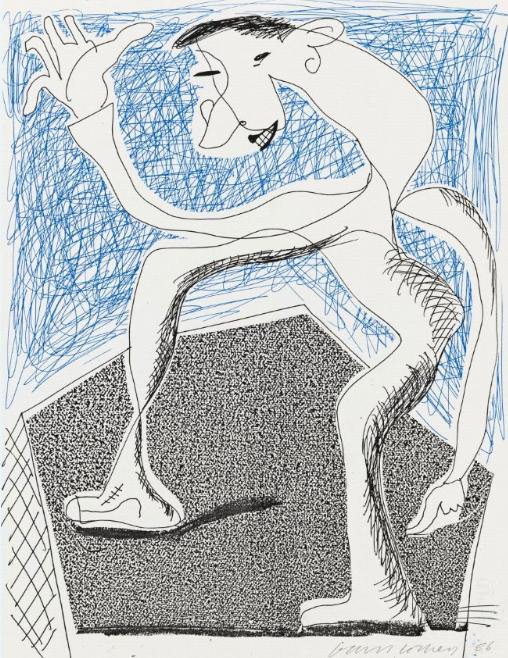
DAVID HOCKNEY (1937 -2026)
Waving April, 1986
Hand-signed by artist, signed, dated and numbered, edition of 45, home-made print on office copy machine on arches paper
27.9 x 21.6 cm
£22,000 + applicable taxes
BLOND CONTEMPORARY
Stand 15
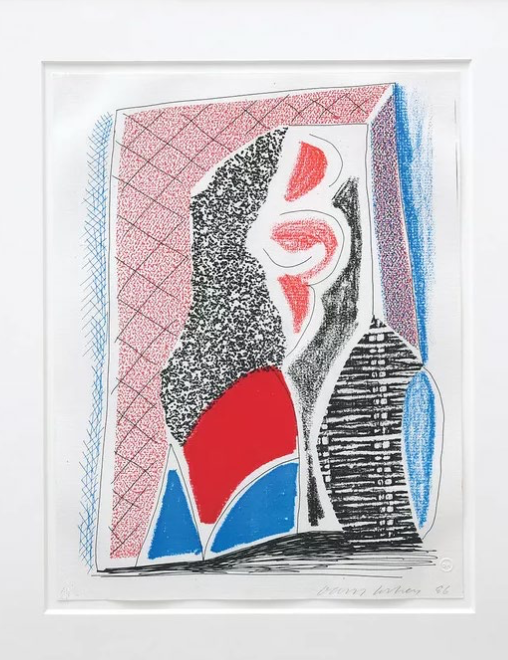
DAVID HOCKNEY (1937 -2026)
Red, Blue and Wicker, c. 1986
Hand-signed by artist, edition of 39, home-made print on office copy machine on arches paper
28 x 21.6 cm
£22,000 + applicable taxes
BLOND CONTEMPORARY
Stand 15
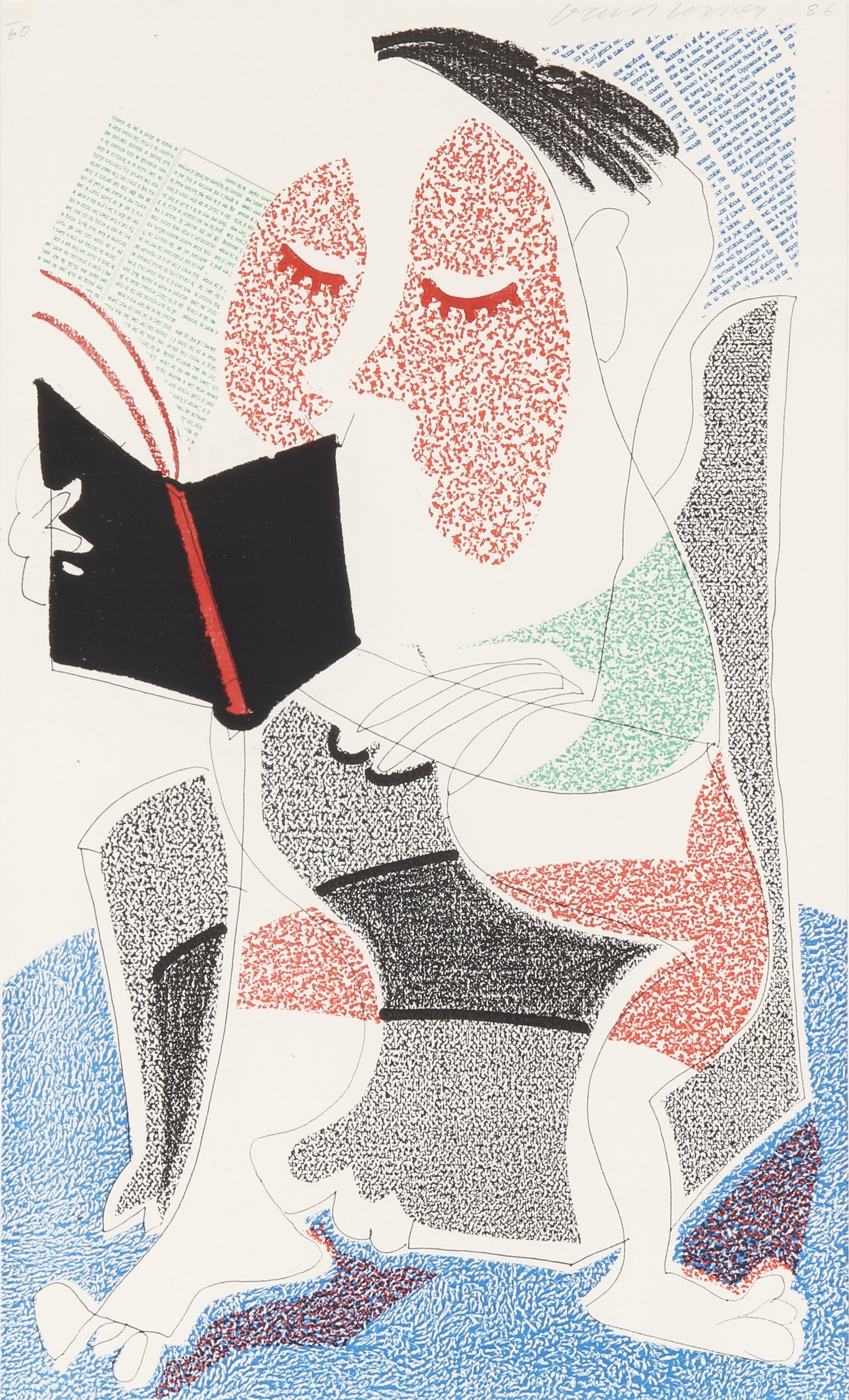
DAVID HOCKNEY (1937 -2026)
Man Reading Stendhal, July 1986 [MCA 302], 1986
Signed, dated and numbered in pencil, edition of 60, homemade print, colour copy machine on Arches wove paper
35 x 21.1 cm
£38,000 + applicable taxes
BLOND CONTEMPORARY
Stand 15
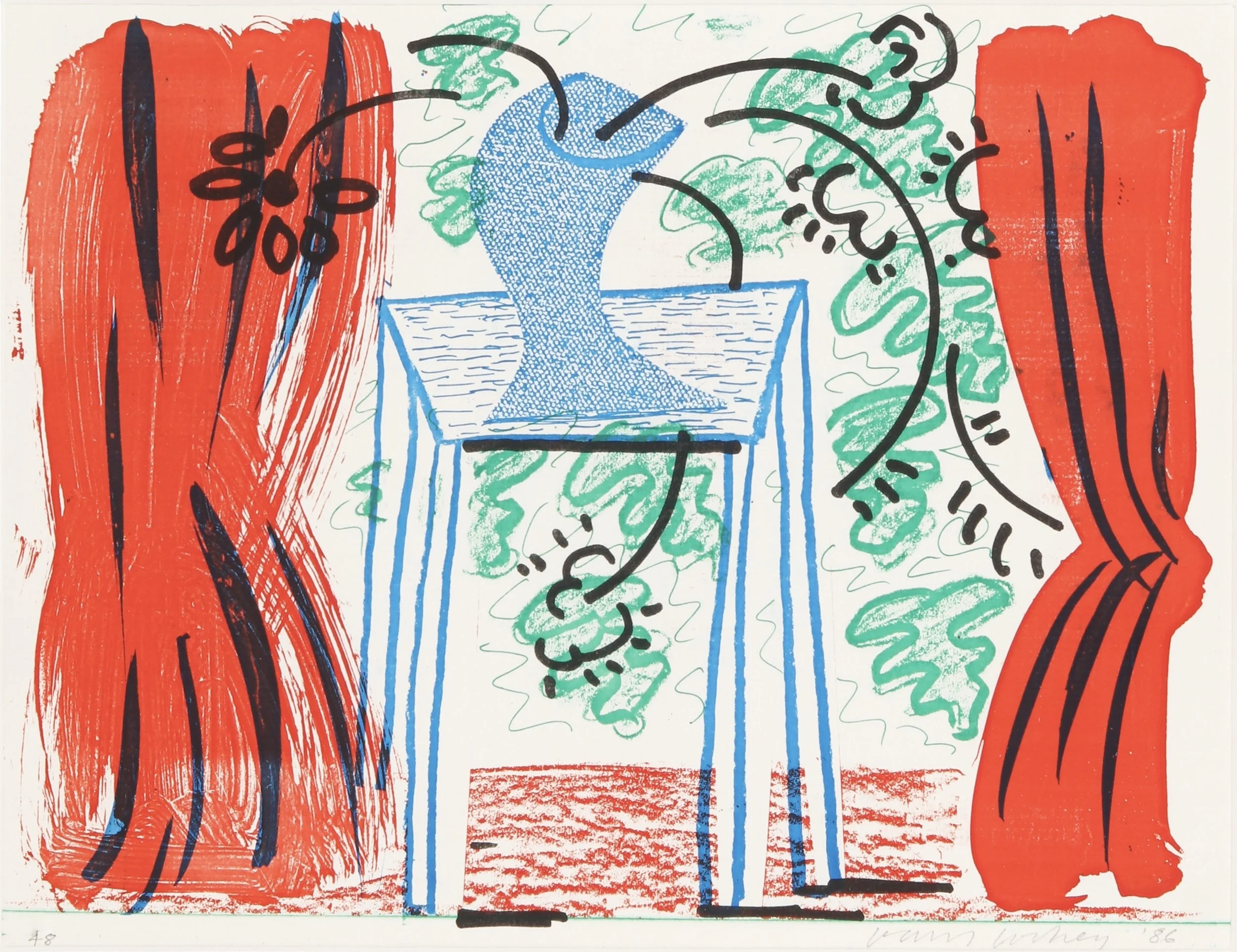
DAVID HOCKNEY (1937 -2026)
Still Life with Curtains [MCA 289], 1986
Signed, dated and numbered from the edition of 48, home-made print, colour copier machine on 120gsm Arches wove paper
21.1 x 26.5 cm
£45,000 + applicable taxes
BLOND CONTEMPORARY
Stand 15
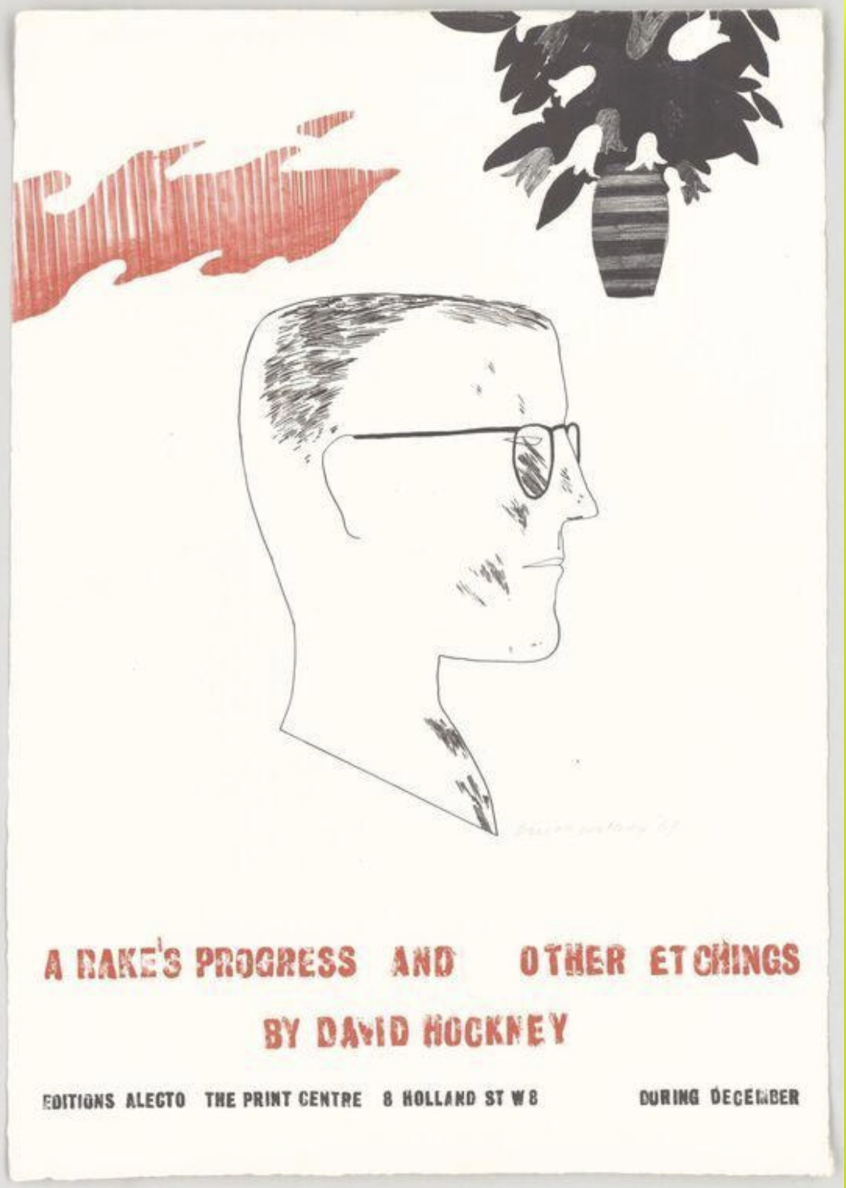
DAVID HOCKNEY (1937 -2026)
A Rake's Progress and Other Etchings, 1963
Edition of 63, lithograph poster in black and red on paper
80 x 57.2 cm
£35,000 + applicable taxes
BLOND CONTEMPORARY
Stand 15
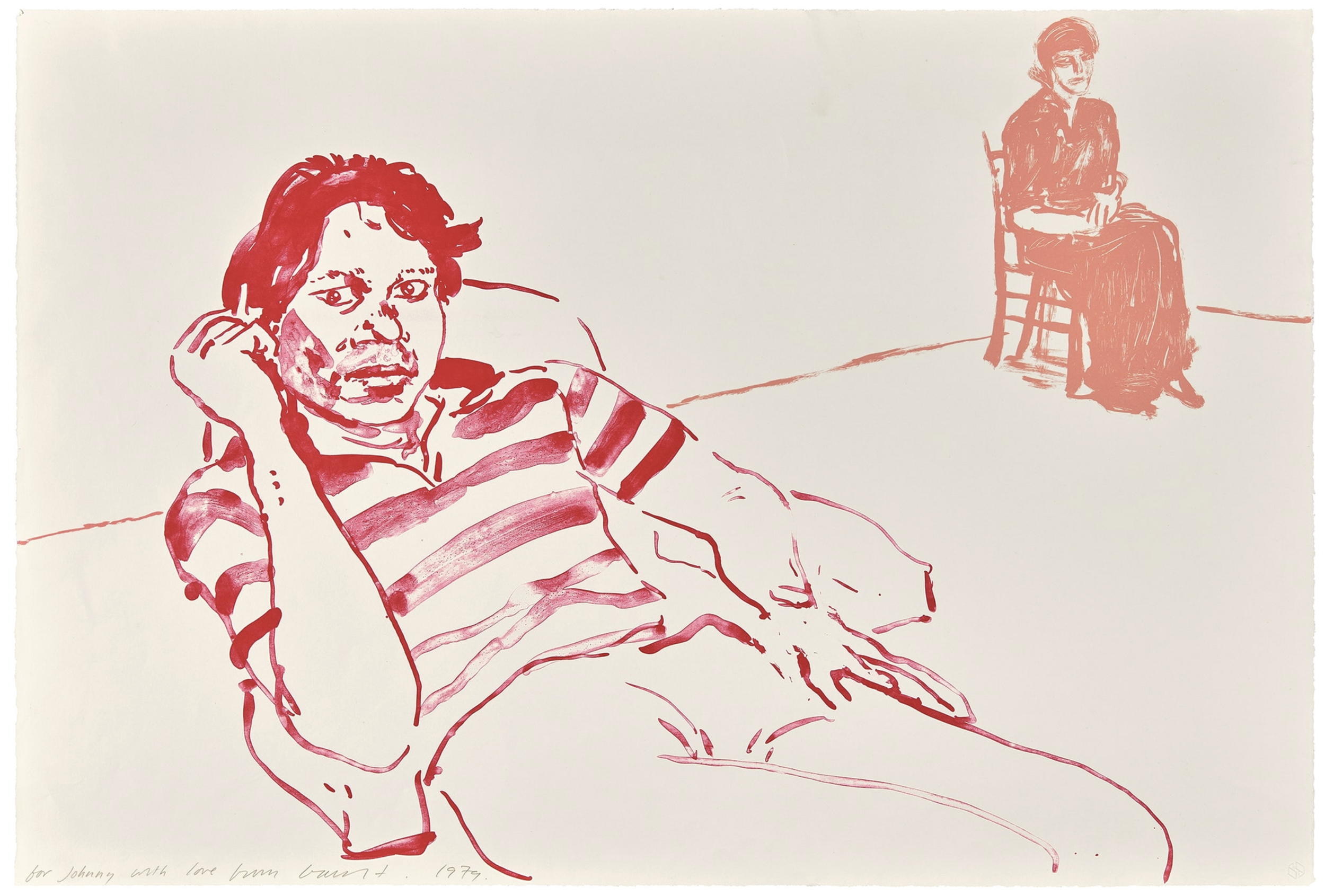
DAVID HOCKNEY (1937 -2026)
Johnny and Lindsay, 1979
Edition of 54, lithograph in colours, on cream BFK Rives paper
76.2 x 112.7 cm
£28,000 + applicable taxes
BLOND CONTEMPORARY
Stand 15
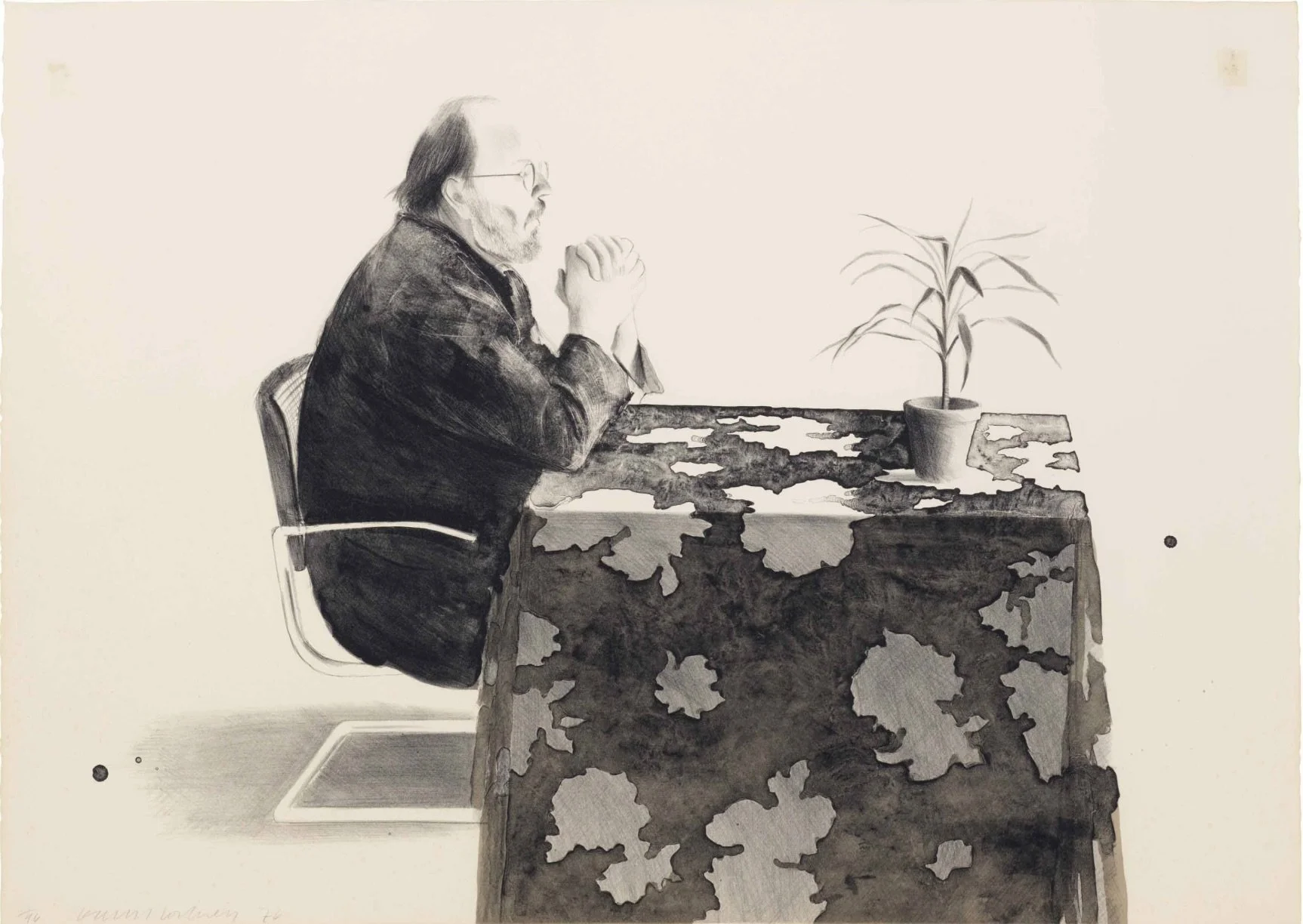
DAVID HOCKNEY (1937 -2026)
Henry at the Table, 1976
Edition of 96, lithograph, on Arches Cover buff paper
75.1 x 105.7 cm
£36,000 + applicable taxes
BLOND CONTEMPORARY
Stand 15
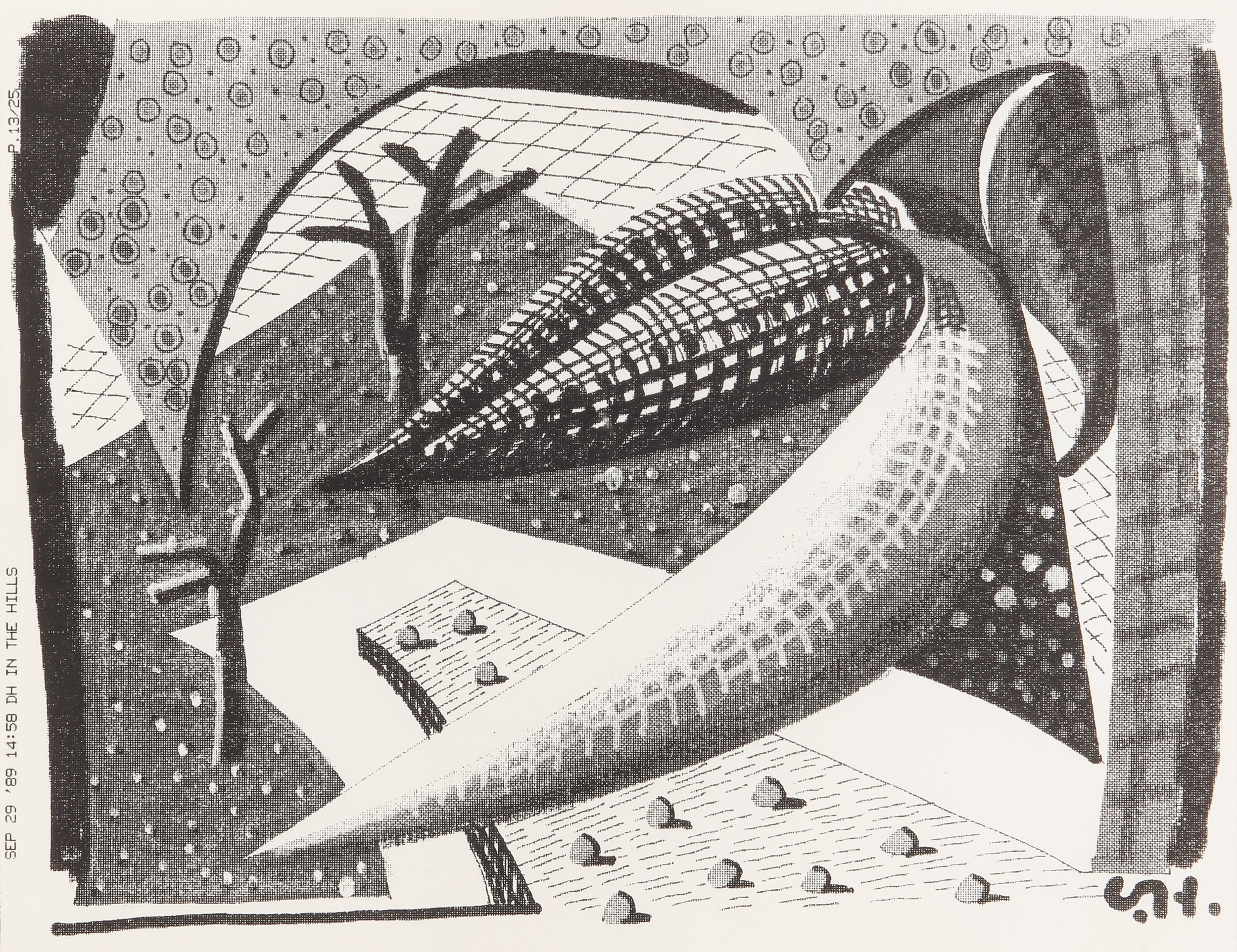
DAVID HOCKNEY (1937 -2026)
Rocks on the Road in Landscape, 1989
Xerox copy of facsimile drawing, from the original ink on paper
22 x 28 cm
£16,000 + applicable taxes
BLOND CONTEMPORARY
Stand 15
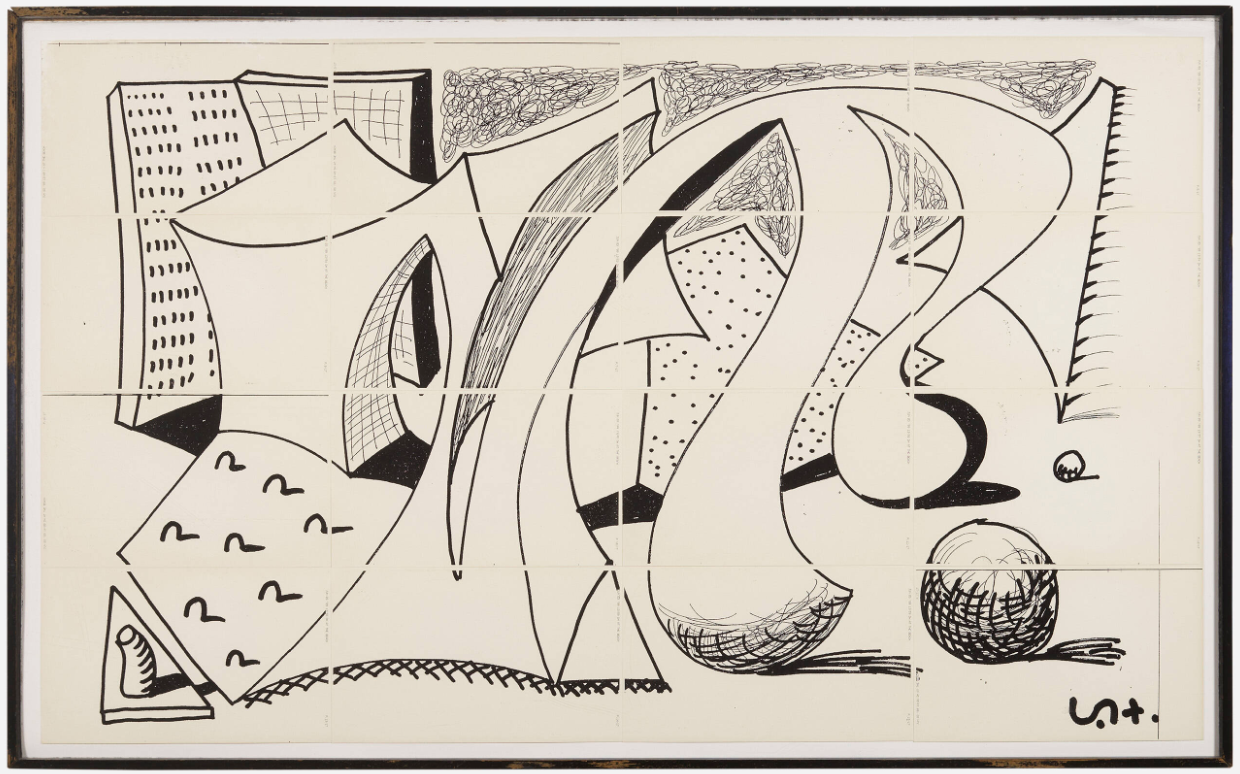
DAVID HOCKNEY (1937 -2026)
Hotel by the Sea, 15 October, 1999
Xerox copy of facsimile drawing in 16 parts on paper, from the original ink on paper
97 × 152 cm
£26,000 + applicable taxes
BLOND CONTEMPORARY
Stand 15

DAVID HOCKNEY (1937 -2026)
Celia, 1984
Charcoal on paper
74.9 × 55.9 cm
TANYA BAXTER CONTEMPORARY
Stand 8
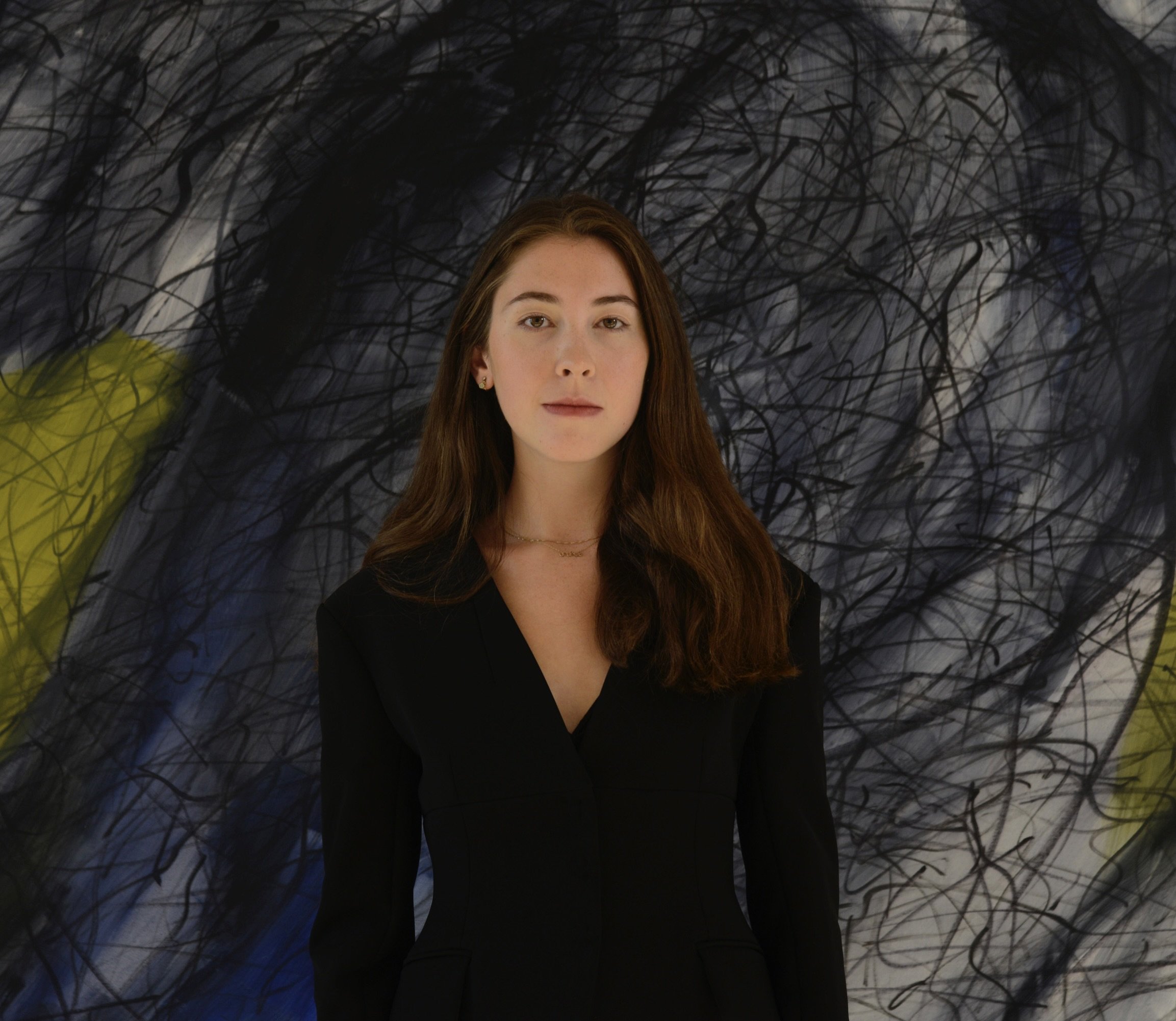
Eleanor Ekserdjian
Eleanor Ekserdjian (b. 1996) is an artist and filmmaker whose practice blends moving images with rapid mark- making. This process results in abstract works that blend fluid motion with striking precision, capturing both a sense of calm and dynamic movement. Her paintings and drawings evolve into lyrical landscapes that explore shifting emotional responses to film, creating a visual dialogue between stillness and motion. Pepe Karmel, author of Abstract Art: A Global History, defined her work as ‘Poetic, elegant and mysterious — a kinetic, subjective transcription of the world into calligraphy.’ She has an MA in Fine Art from The University of Edinburgh and later attended the Royal Drawing School.
Ekserdjian’s recent solo exhibitions include ‘Simultanea’ at Artopia Gallery, Milan (2026), and ‘We Are Our Mountains’ at Messums London, London (2026). Her debut short film Imagined Landscapes was shown at the Institute of Contemporary Arts, London (2025) and at the Socially Relevant Film Festival New York, New York (2026).